
Uncategorized
Evaluating Safety, Stability, and Performance in Kids Mobility Toys
May
Children instinctively seek motion. Rolling forward, steering independently, or accelerating under supervision introduces them to spatial awareness far earlier than passive play ever could. Movement-based toys do more than entertain; they establish physical familiarity with balance, directional correction, plus controlled coordination. We view mobility platforms as developmental instruments, not merely recreational products, because each interaction trains reflexes alongside confidence.
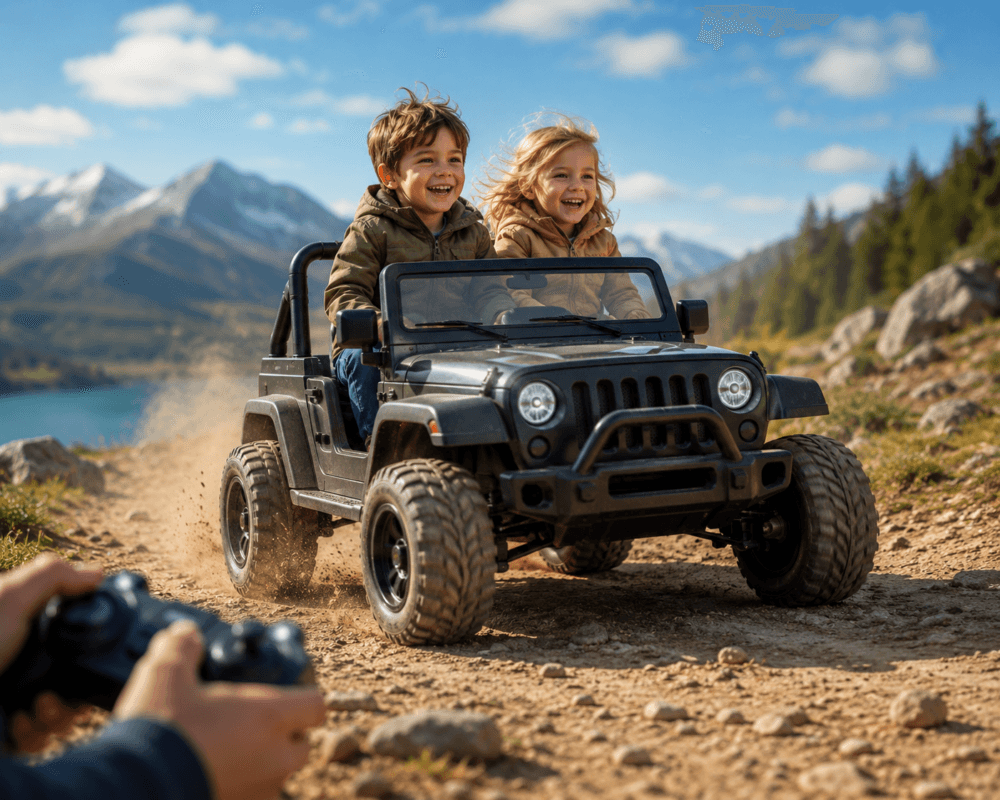
Technological evolution has redefined what safe movement looks like in early childhood mobility. Intelligent motor regulation, structural reinforcement, plus supervisory control integration have elevated safety benchmarks significantly. Within our experience at ISAKAA, the remote control ride on jeep represents a transitional step between passive riding plus active driving, allowing supervised autonomy while preserving operational safety margins.
Structural Stability as the Core Determinant of Safe Mobility
Structural architecture governs whether motion feels grounded or unpredictable. Broad wheel spacing distributes load uniformly, preventing imbalance during turning transitions or acceleration shifts. A low center of gravity anchors the vehicle firmly to the surface, minimizing rollover susceptibility even when directional inputs become abrupt or uneven.
Material rigidity further strengthens stability consistency. Reinforced polymer exteriors combined with internal support frameworks absorb mechanical stress without compromising structural alignment. We prioritize structural balance at ISAKAA because stability determines whether children experience controlled mobility or unintended directional deviation during use.
Power Delivery Systems and Motion Predictability
Electrical propulsion introduces a new dimension of motion consistency, yet its effectiveness depends entirely on controlled energy release. Voltage regulation prevents sudden torque spikes, allowing progressive acceleration rather than abrupt forward thrust. Gradual power delivery ensures that movement remains manageable for developing reflexes.
Battery efficiency also influences operational continuity. Stable energy discharge preserves speed consistency across usage cycles. At ISAKAA, electrical systems are configured to maintain predictable propulsion output, ensuring that mechanical behavior remains steady throughout operation rather than fluctuating unpredictably.
Controlled Acceleration and Torque Moderation
Acceleration behavior determines whether motion feels smooth or destabilizing. Gradual torque transfer enables progressive movement initiation, allowing riders to adapt naturally to motion changes. Abrupt torque release, by contrast, creates imbalance risk.
We emphasize moderated torque curves because predictable acceleration strengthens rider control confidence. Consistent motion patterns allow children to anticipate movement response, improving their steering adaptation over time.
Wheel Geometry and Surface Interaction Dynamics
Wheel structure governs how effectively motion translates into directional stability. Wider contact surfaces improve traction consistency, reducing slip probability across smooth flooring or paved environments. Textured wheel surfaces enhance grip reliability further.
Balanced traction ensures motion accuracy. Reliable surface interaction allows riders to execute directional changes without experiencing unexpected sliding or instability.
Electronic Control Systems and Operational Reliability
Integrated electronic systems regulate motor response, speed limitation, plus directional stability. These systems ensure that propulsion remains within predefined safety thresholds regardless of input intensity.
Consistent electronic mediation prevents unpredictable acceleration behavior. This reliability enhances operational safety while preserving performance consistency across varying usage conditions.
Functional Mechanics Behind Battery Powered Ride-On Jeep Performance
A battery operated ride on jeep operates through coordinated interaction between rechargeable power units, regulated motor assemblies, plus structural stability systems. Electrical energy converts directly into rotational force, producing controlled forward or reverse motion. This process eliminates mechanical unpredictability associated with combustion-based systems.
Performance consistency depends on balanced energy conversion, structural integrity, plus motor responsiveness. We design ride-on mobility platforms at ISAKAA to ensure propulsion strength remains proportional to vehicle weight, preventing excessive acceleration while preserving motion efficiency.
Steering Response Calibration and Directional Accuracy
Steering responsiveness determines whether directional input translates into predictable movement. Controlled steering resistance prevents overcorrection, allowing gradual alignment changes rather than abrupt directional shifts.
Balanced steering feedback improves rider confidence. Children learn to adjust trajectory smoothly, strengthening coordination while minimizing instability risk.
Remote Supervisory Override and Guided Mobility Control
Remote override capability introduces an essential safety safeguard. Adults retain immediate authority over directional movement, speed adjustment, or operational cessation whenever required.
We integrate supervisory override because guided mobility enhances safety without restricting exploratory interaction. Children experience autonomous movement within controlled supervision boundaries.
Structural Load Distribution and Mechanical Endurance
Load distribution affects both safety consistency plus mechanical longevity. Reinforced structural frameworks disperse rider weight evenly, preventing localized structural strain.
Uniform load handling preserves chassis integrity. Stable structural endurance ensures predictable operational behavior across extended usage cycles.
Integrated Safety Mechanisms That Reduce Operational Risk
Safety systems function as preventive stabilizers rather than reactive protections. Seat restraint systems maintain rider positioning during motion transitions. Speed regulation prevents unsafe velocity escalation, preserving controllability.
Electronic braking responsiveness ensures immediate motion cessation when necessary. Reliable deceleration control prevents delayed stopping behavior, preserving safety margins during supervised or independent operation.
How Do ISAKAA Ride-On Experiences Turn Movement Into Fun and Confidence?
Mobility toys introduce children to the simple joy of moving freely while staying fully engaged in play. Steering, accelerating, plus exploring different directions create moments of excitement that keep children curious and active. These playful interactions encourage them to experiment with control while enjoying the thrill of movement in a safe, supervised environment.
As children transition toward independent riding platforms such as a kids bike, balance refinement becomes more pronounced. At ISAKAA, we observe how early powered mobility exposure enhances coordination readiness, strengthening stability perception while improving movement confidence in later independent mobility stages.
FAQs
1. What makes ride-on toys structurally stable for young riders?
Wide wheel spacing, low center of gravity, reinforced chassis design, plus balanced load distribution collectively improve stability. These structural characteristics reduce tipping probability while maintaining consistent surface contact.
2. Why is controlled acceleration important in mobility toys?
Gradual acceleration prevents sudden forward thrust, allowing children to adapt naturally to motion. Predictable propulsion enhances steering control alongside safety reliability.
3. How does parental remote control improve operational safety?
Remote supervisory systems allow adults to override movement instantly. This capability ensures safe intervention whenever children lose directional control or encounter unsafe surroundings.
4. Do powered mobility toys contribute to physical development?
Yes, mobility interaction strengthens coordination, reflex response, plus balance familiarity. These early experiences improve neuromuscular development while supporting confidence in independent movement.